Seattle Rotary’s August 5, 2026 luncheon at the Washington Athletic Club offered a program that blended music, candor, and civic urgency, centering on the future of one of Seattle’s most beloved cultural institutions: the Fifth Avenue Theatre. President John Steckler opened the meeting by welcoming Rotarians and guests and briefly stepping into the day’s wider context, noting the devastating wildfires in Eastern Washington and Rotary’s responsibility to respond. “We do care about them,” he said, adding that the club would be talking with the Rotary Service Foundation “to see what we can do to help.”
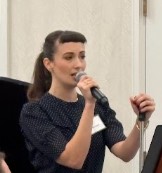
From the outset, the program’s theme was clear: community, memory, and the role of the arts in holding both together. The music committee set the tone with “There’s No Business Like Show Business,” drawing enthusiastic applause. Later, vocalists Tori and Luke delivered a moving rendition of “What I Did for Love” from A Chorus Line, a show slated for the Fifth Avenue’s upcoming season. That song, as it turned out, served as an emotional overture to the story of a theater fighting to sustain its mission in challenging times.
The day’s main speaker, Fifth Avenue Theatre Artistic and Executive Director Bill Berry, began by explaining why that particular number resonated so strongly for him. “The Fifth Avenue is special for many reasons,” Berry told the club. “It’s a place where dreams come true, but it’s not just where dreams come true. It’s also where memories are born.” Families come for holiday productions, couples come for first dates, and audience members, he said, often carry those memories with them for the rest of their lives.
Berry recalled arriving in Seattle 25 years ago, with no intention of becoming a long-term resident. “When I came to Seattle, I thought I was coming here for maybe two or three years,” he said. “Starting 26 years this coming February, I don’t see myself leaving anytime soon. It is a love affair that I have with this beautiful place that we call home.”
He described the Fifth Avenue as a place where 1,800 people gather to “breathe together and laugh together,” and sometimes to cry together. In an era of fragmentation and isolation, shared experiences in the theater remind people “how we’re connected and interconnected to the world at large.”
With the theater’s home, the Skinner Building, about to turn 100, Berry offered a brisk history. The Fifth Avenue opened in 1926 as a “presentation house,” combining live performance with motion pictures, an innovative hybrid for its time. “Some people tell you it was built as a vaudeville house,” he said. “Strictly speaking, it wasn’t… they wanted to combine the two things together—movies and live performance.”
For many years, it was one of the city’s premier destinations. But as multiplexes spread and downtown fell into economic decline, attendance dwindled. Rumors circulated about what might replace the theater—everything from a vast multiplex to “the world’s biggest themed Chinese restaurant.” The building went dark for two years, its future uncertain.
Then a now-familiar group of civic leaders, including figures associated with the 1962 World’s Fair, stepped in. “They said, ‘We can’t let this disappear,’ and they saved the Fifth Avenue,” Berry recounted. Their vision was to bring touring Broadway shows to Seattle at a time when no such circuit existed here. By reopening the theater in 1980 and committing it to Broadway touring productions, they hoped to help revitalize downtown. “And that is indeed what happened,” Berry said.
Over time, the Fifth evolved from a pure presenter of national tours into a producing house, building shows from the ground up with local actors, musicians, and craftspeople. Berry noted that during his tenure he has worked on 40 new musicals, 20 of which premiered on the Fifth Avenue stage. Ten of those went on to Broadway, and two won the Tony Award for Best Musical. “I think we have a track,” he said dryly.
The pandemic, however, upended that trajectory. In the theater’s 100-year history, Berry observed, there have been four years of “darkness”: two during the closure prior to the 1980 reopening, and two more during COVID-19 shutdowns. When audiences vanished, so did the core of the theater’s revenue, even as costs surged roughly 25 percent across labor and materials. Subscriber numbers, which had stood between 19,000 and 22,000 before the pandemic, plummeted to 7,500 at the low point.
“We had a hard time convincing people that leaving their homes was going to be fun again,” he said. “Our couches turned out to be really competitive.” Although subscriptions have now climbed back to around 10,000, the financial damage was serious. The theater accumulated a deficit of roughly $7.5 million in the immediate post-pandemic years.
Berry detailed a series of changes designed both to stabilize the institution and to preserve the quality of what appears on stage. The Fifth shortened show runs from three weeks to two, consolidating audiences and improving “seat utilization,” which in turn improves both the financial and emotional experience. “How it feels in the theater is equally as important as what’s on stage,” he said, noting that even a great production can fall flat in a largely empty house, while a full one can elevate the work.
The theater also cut its overall budget from about $30 million to $23 million, a shift Berry was candid about. “We made cuts, lots of cuts,” he said. That included eliminating a new works development program and slimming down education programs. “This is a loss to our community,” he acknowledged, describing it as a necessary retreat in order to survive and rebuild those offerings later.
To strengthen operations, the Fifth also forged a new alliance with Seattle Theatre Group (STG), which manages the Paramount, Moore, and Neptune theaters and has deep expertise in operating historic buildings and programming concerts and special events. Under the arrangement, STG serves as the Fifth’s landlord and programs additional uses of the theater, while subleasing 26 weeks a year back to the Fifth for its own musical theater productions. “This is a really fortuitous way to work for us,” Berry said. The move allows the Fifth to focus on producing and presenting musical theater while ensuring the venue is fully utilized year-round. He emphasized that the two organizations remain separate nonprofits: “We did not merge into one entity… we just work together.”
To underwrite this transition and erase its deficit, the Fifth Avenue launched a $22 million capital campaign. As of early August, Berry reported, the campaign has raised $15 million. The early funds have helped sustain operations; now, he said, “every dollar raised going forward will reduce that 7.5 million dollar deficit.”
Throughout his remarks, Berry returned to the Fifth’s broader civic role. He pointed out that downtown restaurants time their business planning around the theater’s schedule and that, when audiences buy tickets, they are not only purchasing entertainment but also supporting local artists and a regional creative economy. Without a producing theater like the Fifth, he argued, Seattle would be left asking New York to determine its musical theater diet. “I want some agency in what we put on here in Seattle,” he said. “When you buy a ticket to the Fifth Avenue or make a donation, you are supporting art being made in Seattle.”
The emotional through-line of the meeting was strengthened by an earlier segment, when Rotarian Harvey Rubinstein, interviewed by Nancy Cahill, spoke with striking openness about his Alzheimer’s diagnosis. “The Alzheimer’s diagnosis is a profound shock to the system,” he said. He described reframing his life as “living in an intersection of misfortune and gratitude,” and emphasized the importance of social engagement for those facing memory loss. “Invite them out, take them along, go see them, and bring them to Rotary or a musical theater performance,” he urged.
Steckler praised Harvey as “a remarkable, remarkable person,” recalling how Harvey met with his son the day after hearing he was job hunting, simply because a fellow Rotarian asked. That spirit of mutual support mirrored Berry’s description of the arts ecosystem, in which actors, musicians, theaters, and donors all depend on one another.
In gratitude for Berry’s visit, the Rotary Service Foundation donated 600 meals to needy families in his name. The Fifth Avenue, for its part, extended a standing discount to club members—20 percent off touring shows and 25 percent off self-produced productions, with details to appear in the club newsletter. Jevon Powell rounded out the meeting with announcements of an Elk Run Farm work party, an offsite luncheon with Seattle School Superintendent Ben Shull, a Lake Union “Happy Hour for Good,” and a Zoom-only program with investment strategist Amanda Agati later in the month.
As the meeting drew to a close, Steckler reminded members that for most theaters, ticket revenue covers only about 40 percent of what it takes to operate; the remaining 60 percent comes from donations. “So when you think that the arts are asking you for donations, there’s a reason for it,” he said. “They really need our donations above and beyond the ticket prices.”
He concluded with a call to action that encompassed both Rotary’s service ethos and Berry’s appeal for cultural stewardship. “Let’s go out and support our theater. Let’s support our city and let’s support our community,” he said, before adjourning the meeting—on time, he noted with a smile—after a program that underscored just how closely those three are intertwined.
-Thank you for another extensive report, Logan!