 By Jesse Thomas
Mental health impacts nearly all of our lives, whether it affects a family member, loved one, or those we see on the streets in our community. And the stigma around the topic means it’s not discussed. One in five Americans experiences a mental health incident in a given year. In King County, suicide is the second leading cause of death for 10 to 24-year-olds.
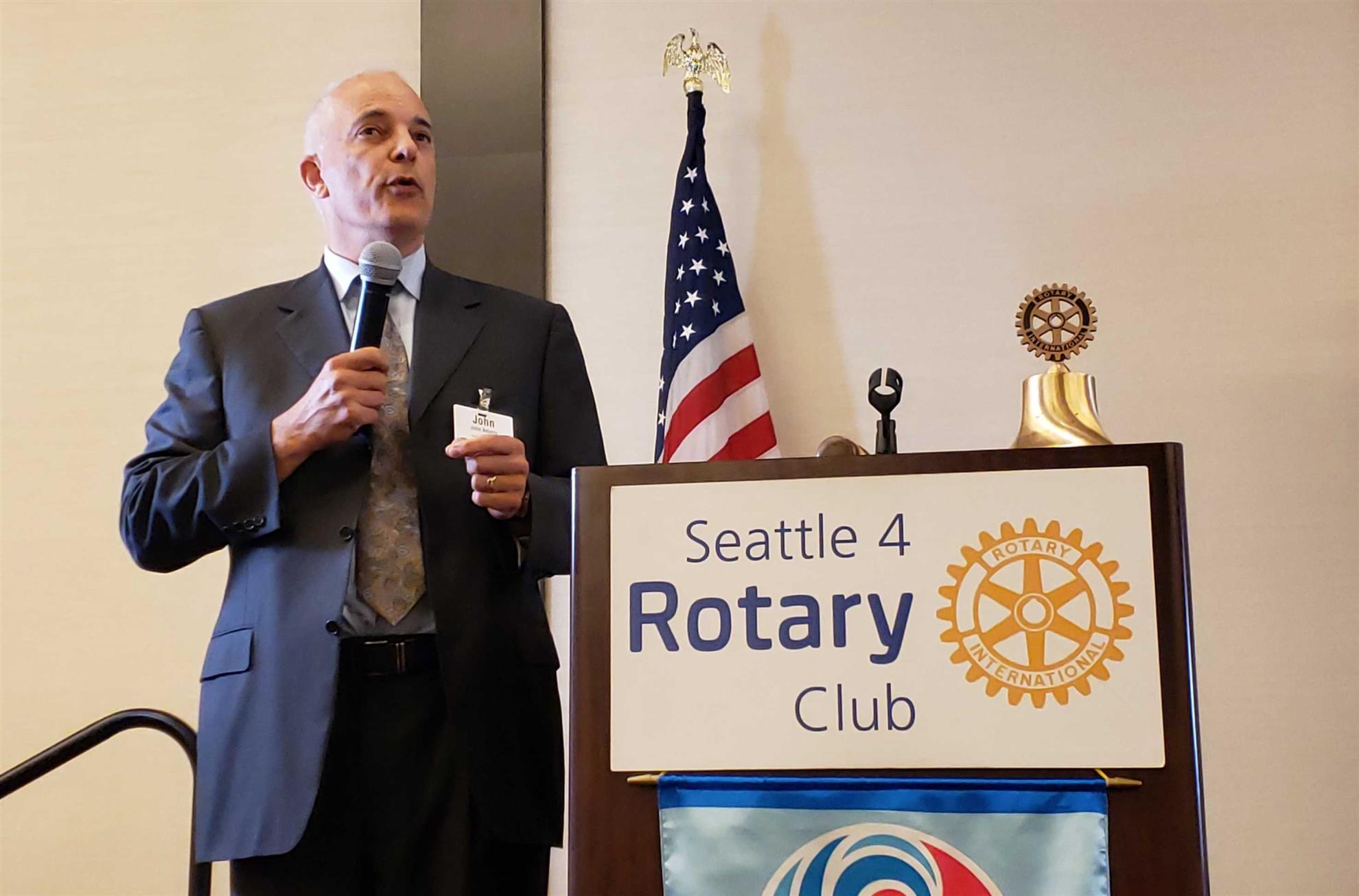 Seattle 4 Rotarian John Adams introduced the program with the courage to share his own personal loss and honor the memory of his son, Peter. Adopted from Russia, and with an eating compulsion at a young age due to the starving conditions of his native country, Peter struggled with mental health. He required 24-hour care as a child, and it was so severe that their family had no visitors to their home for a five-year period. With the help of treatment facilities, Peter was diagnosed as bipolar and did recover. He graduated high school in the Northwest and became actively involved with the YMCA. Tragically, shortly after aging out of YMCA transitional housing, Peter took his own life last month. John’s message to fellow Rotarians is that “we are in this together.” He asked for more awareness and compassion toward the problem and called for legislative change with increased funding for more services.
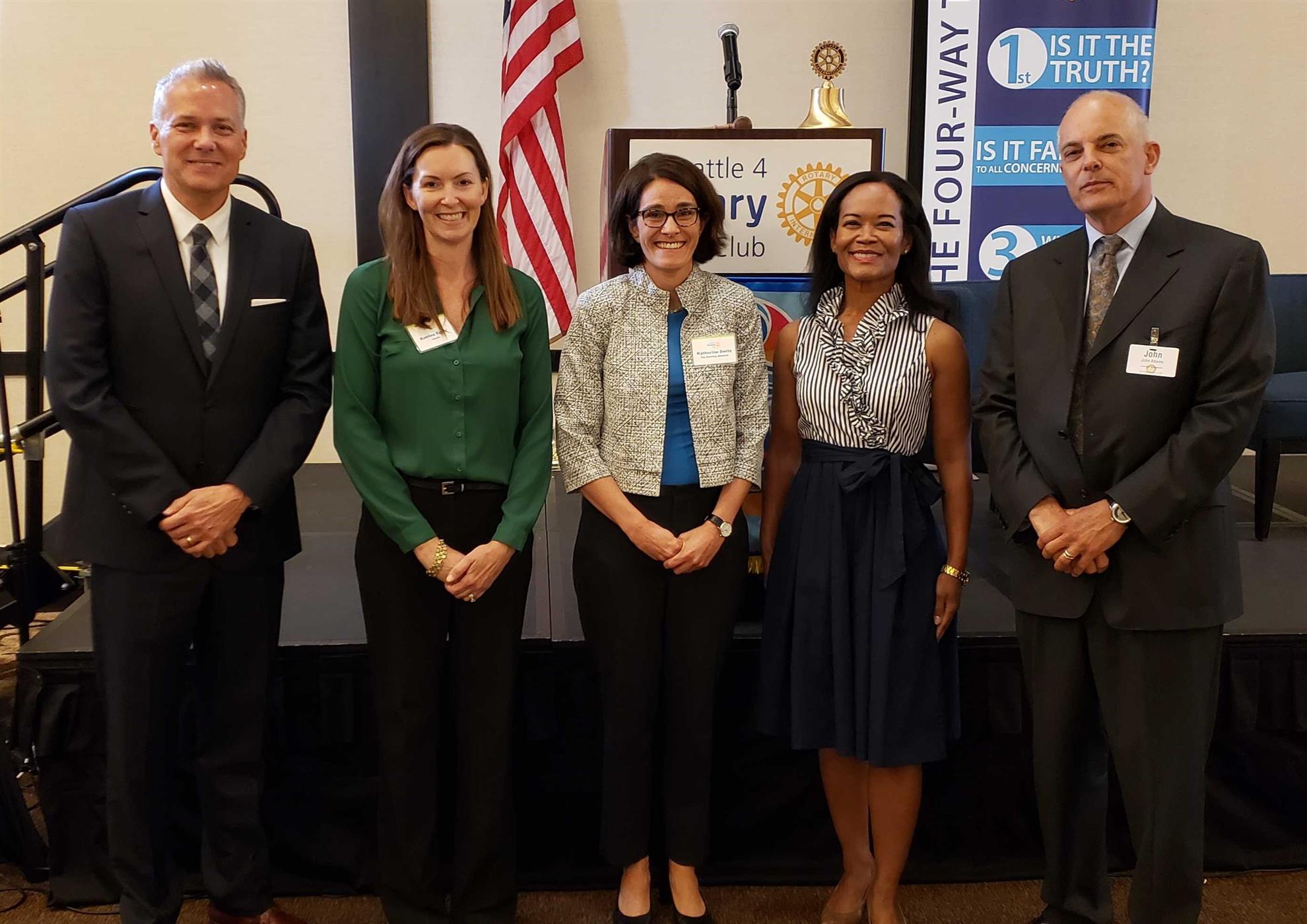
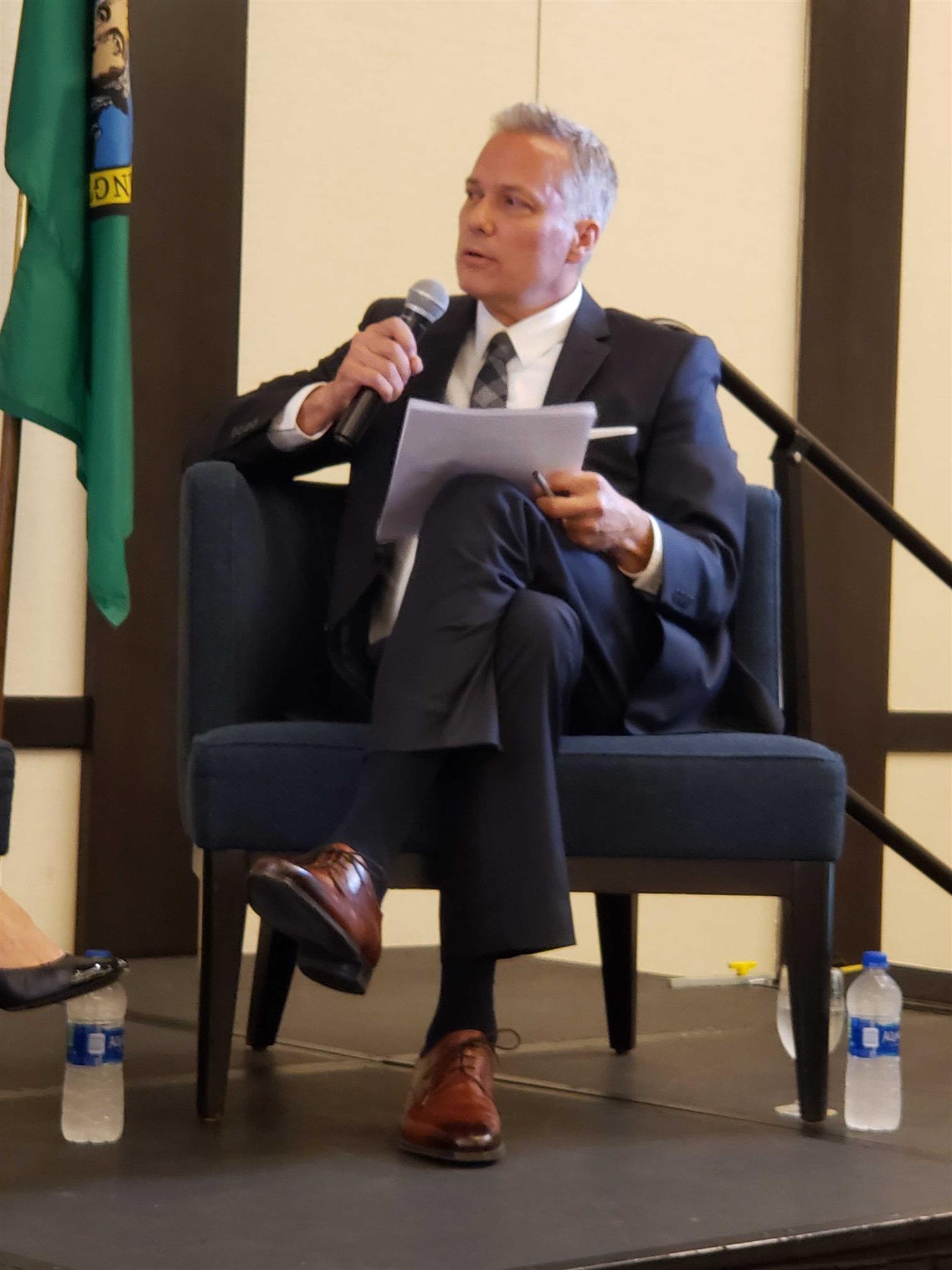 Past Seattle 4 President, Mark Wright, moderated the discussion on this important topic with Katrina Egner, Vice President and Chief Programs Officer at Sound (formerly Sound Mental Health), and Katherine Switz, Executive Director and founder of The Stability Network, an organization that seeks to help those impacted by mental illness to continue thriving in life.
Stories bring awareness and Mark asked Katrina and Katherine to share theirs. Katherine, a Harvard MBA graduate, was diagnosed as bipolar in college. Katrina, who has worked in the industry for 25 years, lost an aunt to a battle with addiction, and her family still struggles to talk about her. There is a “huge issue with people understanding how to treat and accommodate mental health because we don’t talk about it,” Katherine said.
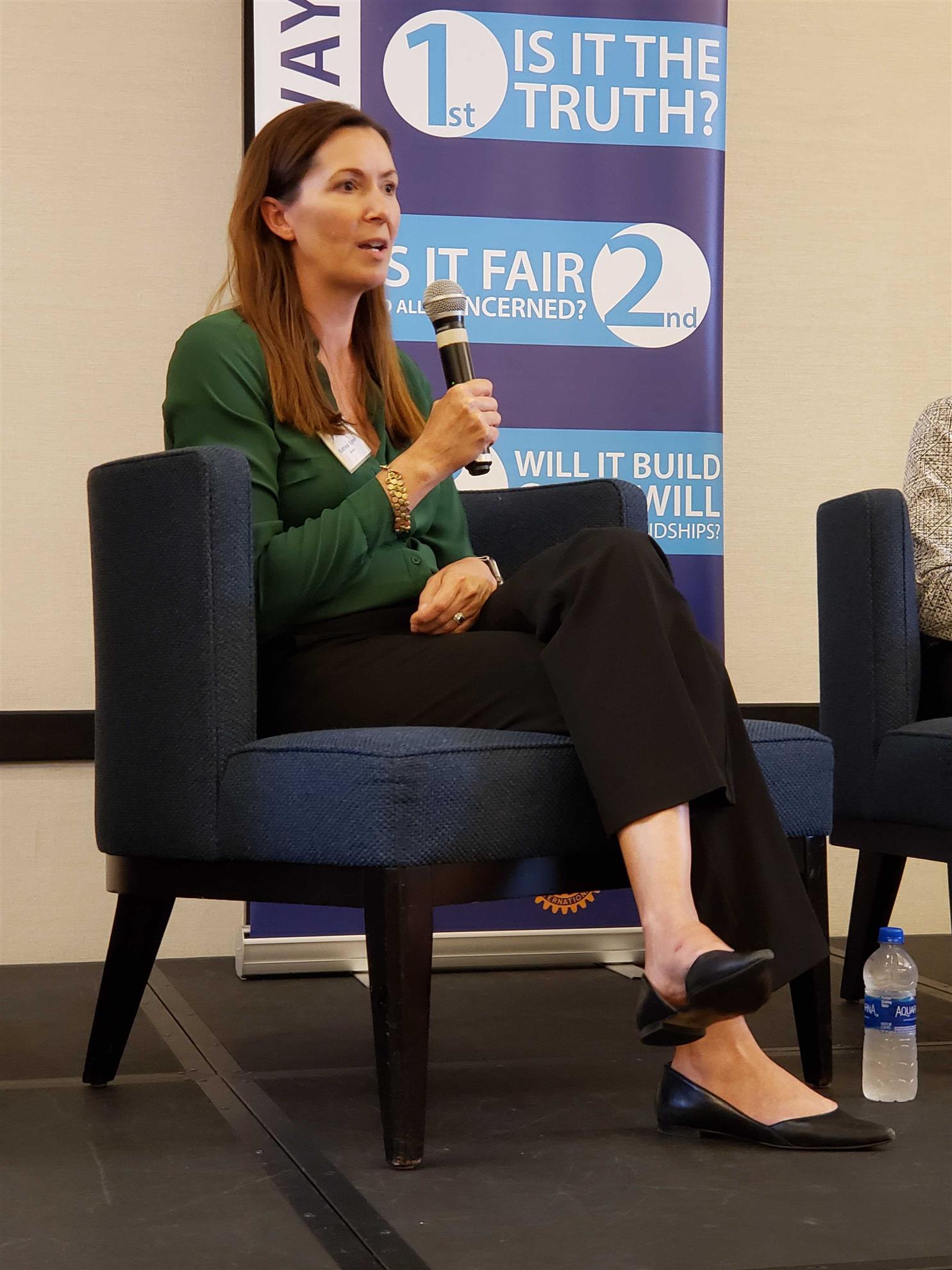 “It’s a massive problem right now, and our community is really hurting,” said Katrina. And the homeless, who are often chronic sufferers, are relegated to the street without access to insurance, and they are not welcomed in primary care and many shelters. While we need more housing, amid ever-increasing costs in Seattle, good care should be comprehensive and more than just housing, and include easy access to services, Katrina said.
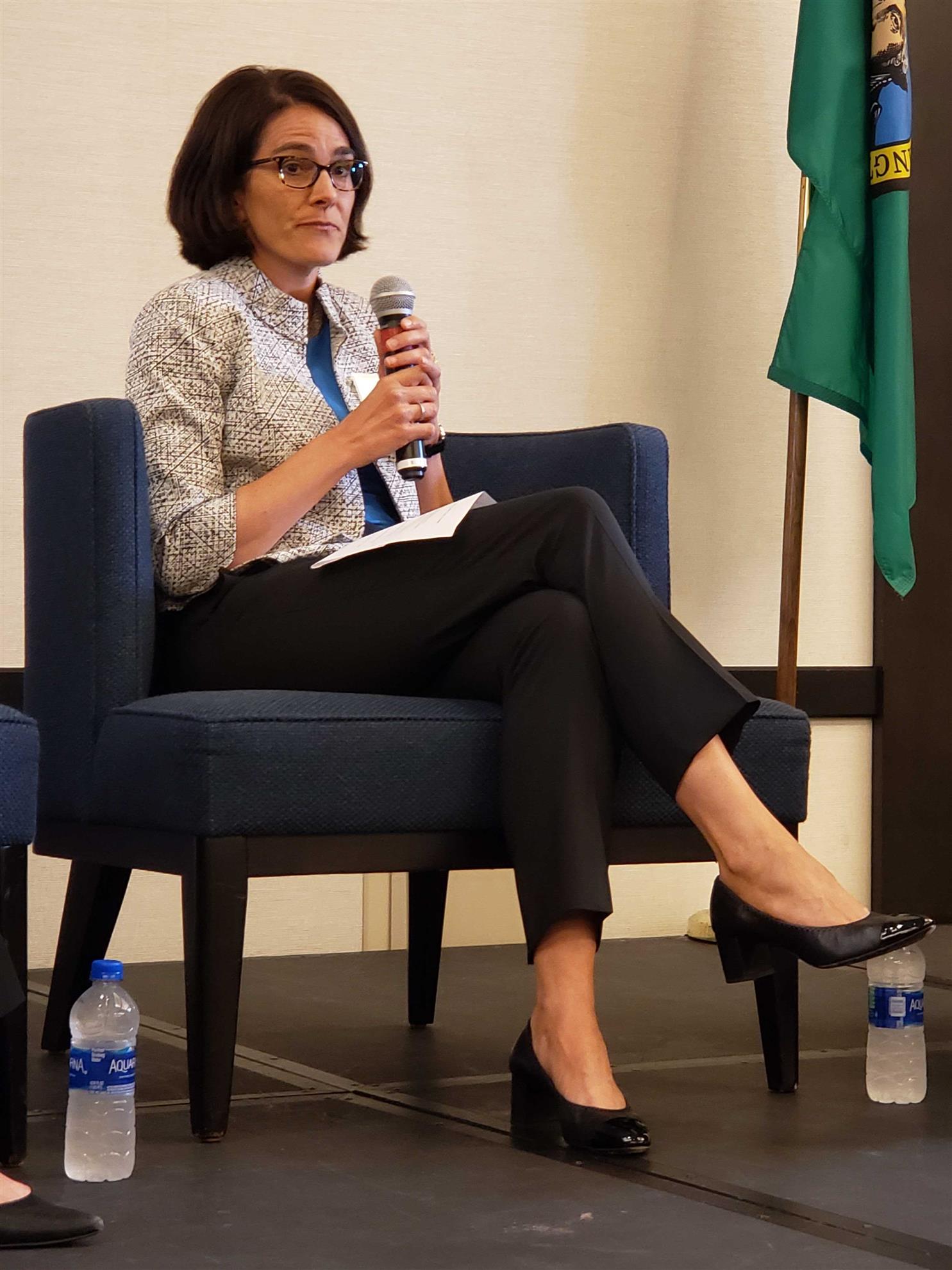 Katherine shared how mental health extends far beyond the streets, and into corporate America, where she faced a lack of awareness in her career. Recounting an episode of serious anxiety, when she approached her HR department of a blue chip company, she was told she had three months to turn it around. Companies often “simply don’t know what to do,” said Katherine. Mark Wright then asked the audience to imagine how the response would be different if you approached HR with a cancer diagnosis. We’ve got to get to a point where HR is in alignment on mental health and cancer, as examples.
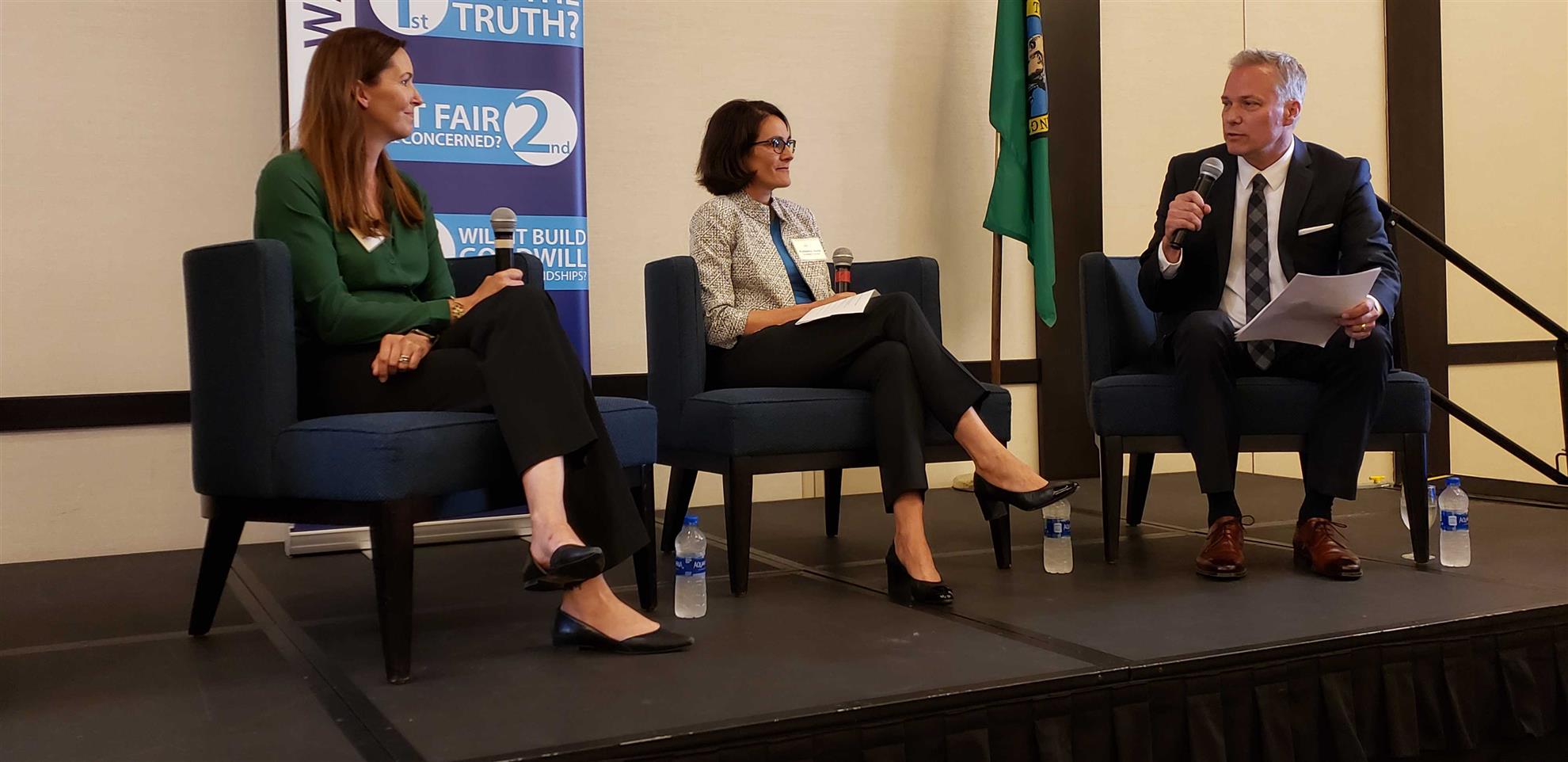 In Mark’s words, “we all have a role to play.” So what can you do to help? Katrina and Katherine both shared some simple actionable items that we can do to help make a difference:
- If you were at the luncheon, go tell three people. More of us talking and raising awareness helps reduce the stigma around mental health.
- If you’re worried if someone is not well, simply ask them “How are you doing?” “Basic empathy can go a long way,” Katherine said.
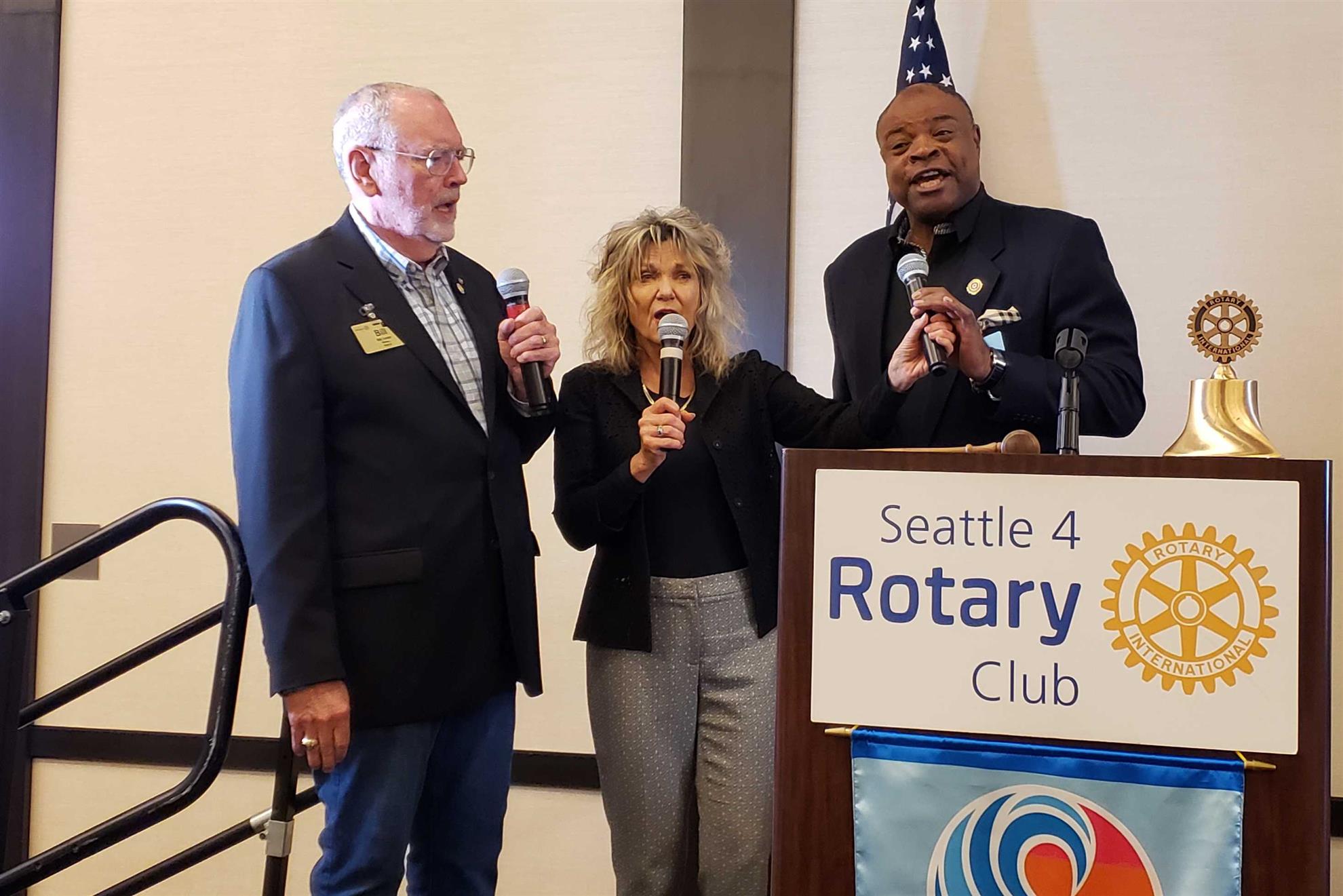 Early in the meeting, Skip Rowland, Linda Rough, and Burr Stewart led the room in singing We Shall Overcome to celebrate June 19th which marks the anniversary of the end of slavery. Bill Center provided inspiration, sharing that while President Lincoln issued the final Emancipation Proclamation, freeing those enslaved, on January 1st, 1863, it wasn’t until more than two years later on June 19th, 1865 that slaves in Texas were notified by Union Civil War soldiers of the abolition of slavery. Bill finished with the quote from Martin Luther King: “The arc of the moral universe is long, but it bends toward justice.”
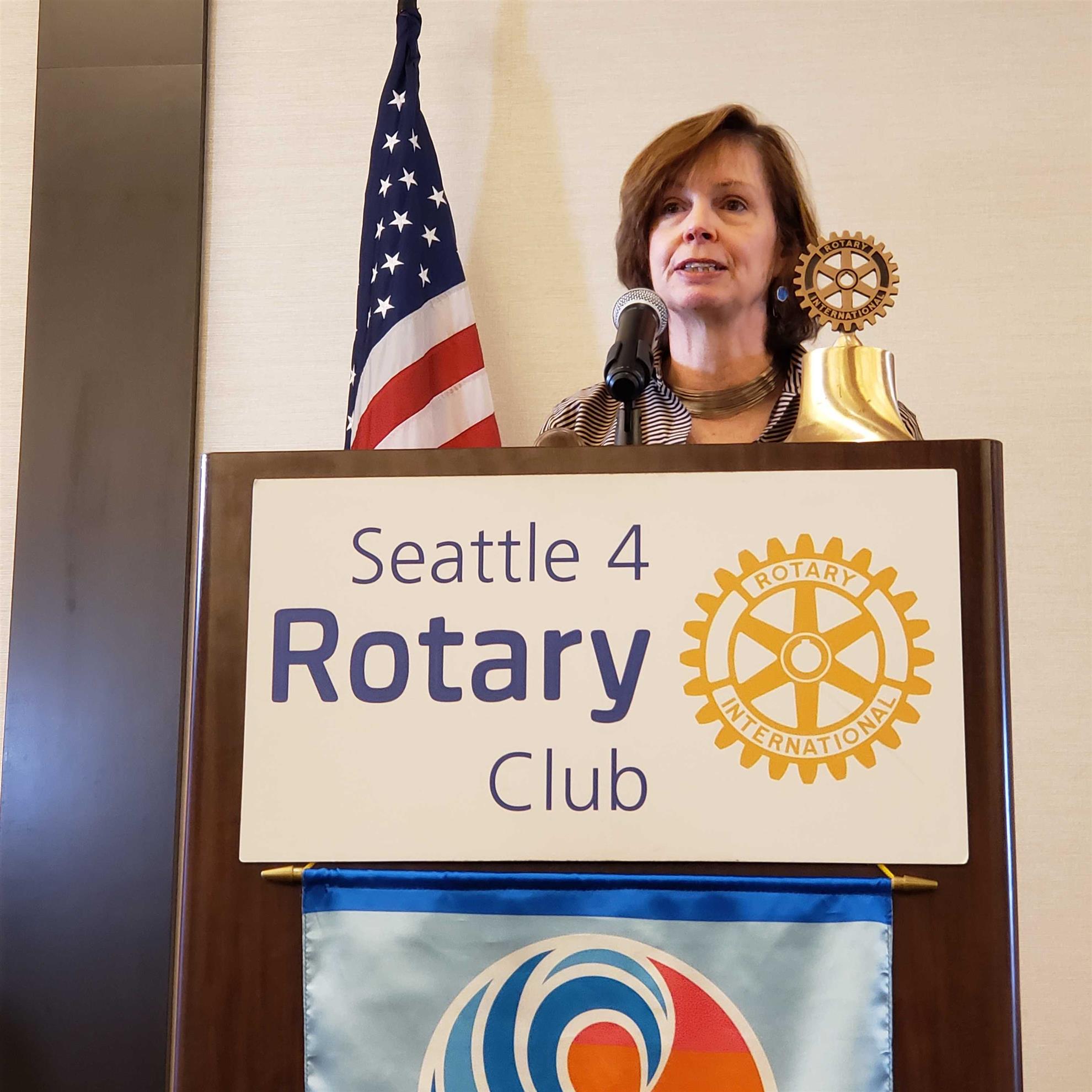 President Cindy asked for a moment of silence in memory of Bill Bain Jr., who passed away on June 8th, and was a Seattle 4 member dating back to 1961. With his wife Nancy attending Wednesday’s luncheon, Lori Walker remembered Bain Jr. and the “respect and inclusion he showed to everyone,” including championing women’s rights before it was popular to do so.
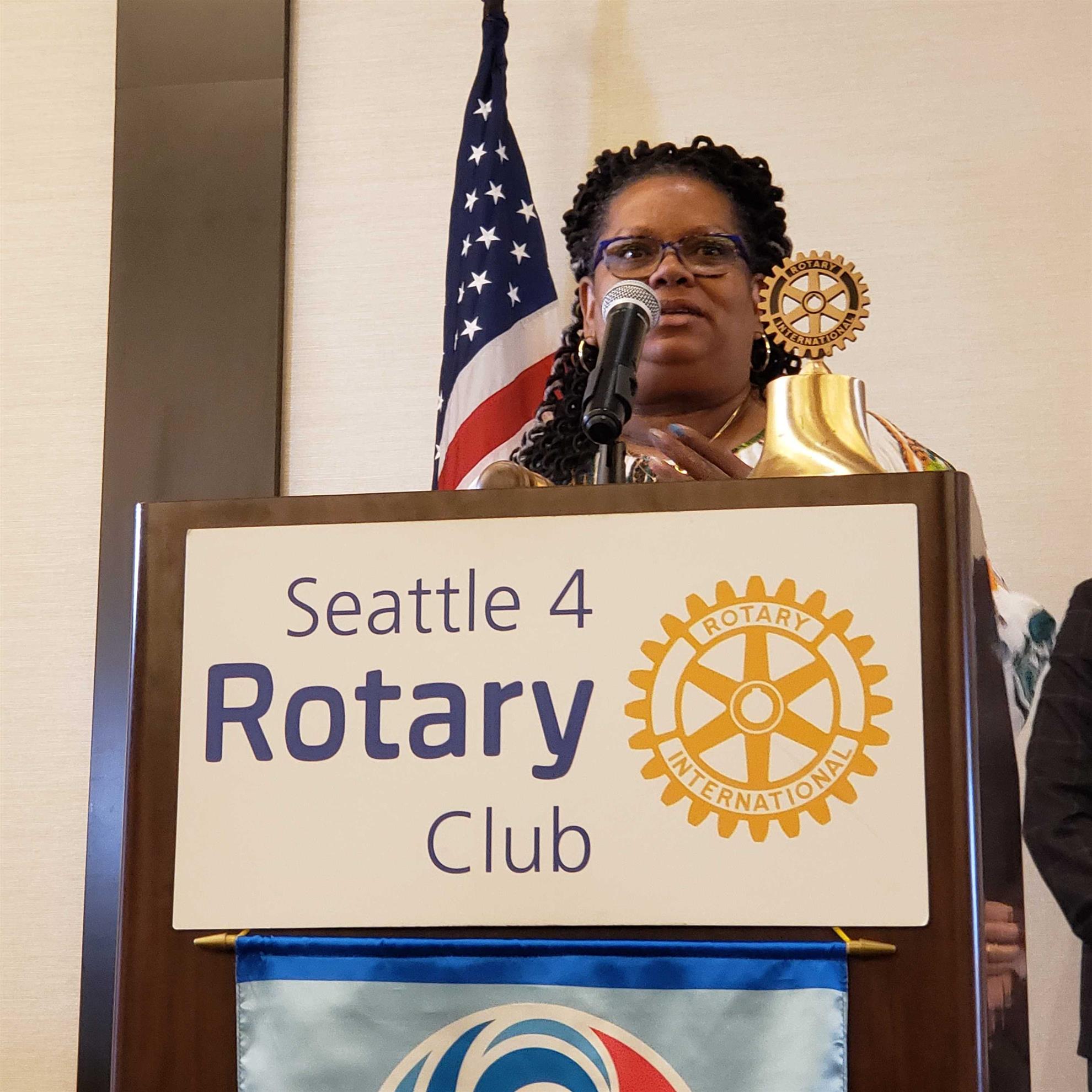 Chris Clark and Patrick Carter shared the podium with a moment to highlight Seattle 4 Rotary’s support of the Boys and Girls Club of King County, which is the longest standing service project of Seattle 4 Rotary. President Cindy ended the meeting with a proverb from Gandhi: “In a gentle way, you can shake the world.”
.jpg) This week's Totem Report was written by Jesse Thomas.
This week's Totem Report was written by Jesse Thomas.